How Two Little Words From the Improv Stage Rewired the Way I Live My Life
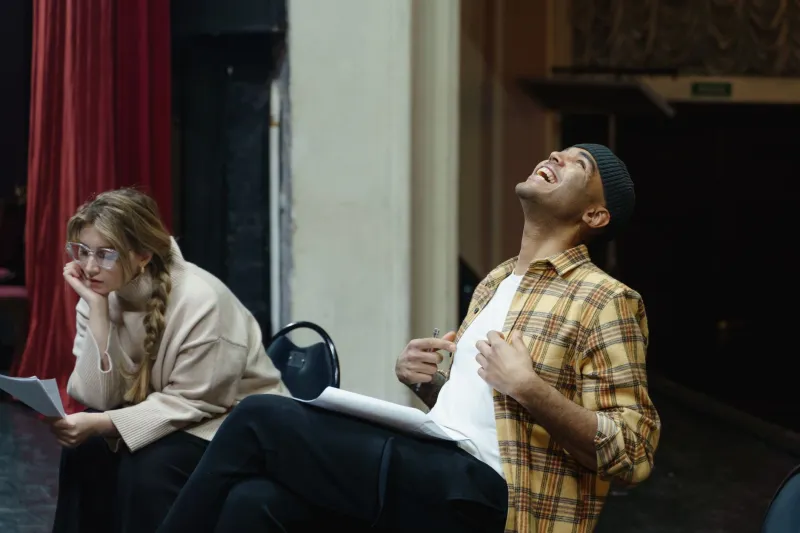
The first time Dani Reyes walked into an improv workshop, she was convinced it wasn't for her. She was a classically trained dancer, used to choreography that had been locked in weeks before opening night. The idea of making things up in real time — in front of people — felt like standing at the edge of a cliff.
"My whole identity was built around preparation," she says. "Improv felt like the opposite of everything I believed about performance."
Then her instructor wrote two words on a whiteboard: Yes, And.
It's the cornerstone of improvisational theater. When your scene partner throws you an idea — no matter how unexpected, no matter how weird — you accept it as real and you add to it. You don't block. You don't redirect. You receive, and then you give back.
Dani learned the rule in a Tuesday evening class. By Thursday, she was using it in a conversation with her sister that had been stuck in a loop for two years.
What the Rule Actually Means (and What It Doesn't)
Here's where people get it wrong: "Yes, And" isn't about being agreeable. It's not a self-help mantra for doormats. In the context of improv, it's a structural commitment to collaborative momentum — the agreement that neither person will let the scene die by refusing what the other person brings.
Psychologists who study collaborative creativity use language like "psychological safety" and "co-regulation" to describe what happens when people stop defending their own ideas long enough to genuinely receive someone else's. Improv just has a snappier name for it.
"What the technique really teaches you," says Marcus Webb, an improv coach based in Chicago who's led workshops for everything from theater conservatories to corporate teams, "is that your first job in any exchange isn't to evaluate — it's to engage. Evaluation can come later. But if you evaluate before you engage, you've already killed the possibility."
That distinction — engage first, evaluate second — is where most of us fail in real life. We hear a new idea from a coworker and immediately start building the case against it. A partner suggests something unexpected and we instinctively protect our existing plan. A life circumstance we didn't choose lands in our lap and we spend all our energy arguing with the reality of it instead of figuring out what to build next.
When Life Doesn't Stick to the Script
Trevor Okafor spent twelve years as a working actor in New York before the pandemic shut down live theater entirely. The industry he'd built his whole identity around simply... stopped.
"I went through a real grieving period," he says. "But somewhere in month three of lockdown, I started thinking about improv training I'd done years earlier. The whole game is about responding to what's actually in front of you — not what you wanted to be in front of you."
Trevor started offering virtual storytelling workshops for teenagers in his Brooklyn neighborhood. He didn't plan it as a career pivot. He just said yes to a neighbor who asked if he'd be willing to try. Then he added. Then he added again.
Two years later, he's running a full youth arts program with a waiting list. He still acts. But he also leads. He didn't plan either of those things — he built them scene by scene.
"Improv taught me that the best stuff rarely comes from the plan," he says. "It comes from what you do when the plan falls apart."
The Relationship Piece Nobody Talks About
Dani, the dancer from the opening of this story, eventually figured out what had been breaking down in her relationship with her sister. Every conversation turned into a negotiation because both of them were blocking — interrupting the other's reality with their own counter-narrative before the first sentence was even finished.
"I started just... listening differently," Dani says. "Not waiting for my turn to talk. Actually receiving what she was saying and asking myself, okay, what do I add to this? How do I build on it instead of argue with it?"
Research in communication science backs this up. Studies on active listening consistently show that people feel more understood — and are more willing to collaborate — when the person they're talking to demonstrates that they've genuinely absorbed what was said before responding. The improv instinct to accept and build mirrors this almost exactly.
Marcus Webb sees it constantly in his workshops. "I'll have two people who came in barely speaking to each other — maybe a manager and an employee, maybe two performers who've been competing — and by the end of a single 'Yes, And' exercise, something has shifted. Not because they suddenly agree on everything. Because they practiced the experience of being heard."
Building the Muscle
If you've never taken an improv class, the good news is that you don't have to perform in front of anyone to start practicing the principle. Here are a few ways performers and coaches suggest working it into daily life:
Catch your blocks. Pay attention to how often your instinct is to immediately counter an idea rather than explore it first. You don't have to abandon your perspective — just notice the reflex.
Try a "Yes, And" conversation. Pick a low-stakes discussion and commit to acknowledging what the other person said before adding your own thought. It feels awkward at first. That's the point.
Apply it to circumstances, not just people. When something unexpected happens — a plan falls through, a door closes — try naming what's actually true about the situation before jumping to resistance. Yes, this is happening. And what can I do with it?
Take a class. Seriously. Even a single improv workshop can shift something fundamental about how you relate to uncertainty. Many community theaters and performing arts centers — including programs like ours — offer beginner sessions that are genuinely low-pressure.
The Stage as a Laboratory for Living
This is what we believe at Just Be You Performing Arts: the stage isn't separate from real life. It's a place where you practice being human — more honestly, more bravely, more collaboratively than everyday life usually demands.
Improv might be the purest version of that. There's no script to hide behind. No choreography to fall back on. Just you, another person, and the agreement that whatever gets brought into the room is worth building on.
Dani puts it simply: "I used to think preparation was how you controlled outcomes. Improv taught me that you can't control outcomes. You can only control how you respond to what shows up."
Two words. Infinite applications.
Yes — this is what's in front of you. And — here's what you're going to do with it.