Cracking Open: How Embracing Your Fears Onstage Actually Makes You Unstoppable
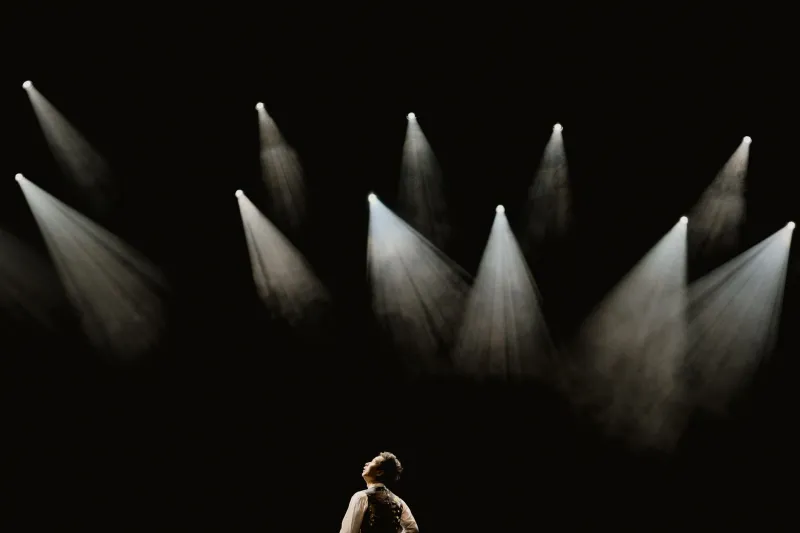
There's a moment that almost every performer knows. You're standing in the wings, heart hammering, palms doing their own little thing, and your brain is screaming at you to hold it together. So you build the wall. You tighten the jaw, smooth the face, and walk out there looking polished and composed — and somehow, inexplicably, the performance falls completely flat.
Now flip that. Imagine walking out there having decided, just for tonight, to let people actually see you. Not your character. You. The nervous one. The one who cares almost too much. And suddenly — the audience leans in.
This is the vulnerability paradox, and it's reshaping the way performers, coaches, and directors think about what it means to be truly compelling onstage.
The Wall You Build Is the Wall Between You and the Audience
Acting coach and theater educator Dana Reyes, who runs workshops out of Chicago's independent theater circuit, puts it plainly: "The impulse to protect yourself onstage is completely human. But armor doesn't read. Distance doesn't read. What reads is a person who is actually in it."
She describes a student she worked with — a technically gifted dancer who could execute every combination flawlessly but left audiences cold. "She had beautiful form. Absolutely stunning lines. But she was performing at the audience instead of with them. The second she started letting her actual emotion into her body — even the uncertainty, even the effort — everything changed. People started crying. She hadn't changed a single step."
This isn't just anecdotal. Researchers in performance psychology have found that audiences are remarkably attuned to authenticity. A 2019 study out of New York University's Steinhardt School found that viewers consistently rated performances as more emotionally compelling when performers showed what researchers called "affective congruence" — meaning the emotion in the body matched something real, not manufactured. Our mirror neuron systems, the neural networks that fire when we observe someone else experiencing something, respond more intensely to genuine feeling than to imitation.
In short? Your audience's brain knows when you're faking it.
Vulnerability Isn't the Same as Falling Apart
Here's where a lot of performers get tripped up. Vulnerability doesn't mean dissolving into a puddle every night. It doesn't mean losing the thread of your performance or letting personal chaos hijack the show. What it does mean is allowing real emotional material — your actual fears, your actual longing, your actual uncertainty — to inform what you're doing onstage.
"There's a huge difference between being emotionally available and being emotionally uncontrolled," says Marcus Webb, a director based in Atlanta who works extensively with first-generation college theater students. "I tell my actors: think of it like holding water in your hands. You want to feel the water. You want the audience to see the water. But you're not dropping it."
Practically speaking, this looks like a lot of different things depending on the discipline. For actors, it might mean doing the personal prep work — journaling, sense memory exercises, or honest conversations with a director — to locate the real emotional connection to a role before stepping onstage. For dancers, it can mean releasing the obsessive focus on technique just enough to let intention lead the movement. For singers, it might mean resisting the urge to hide behind vocal pyrotechnics and instead sitting inside a lyric like it actually matters.
The common thread is permission. Giving yourself permission to be affected.
Why We're So Scared to Be Seen
Of course, none of this is easy. If it were, everyone would be doing it. The reason performers default to armor is the same reason humans have always sought protection: being seen is risky. Being seen means being judged. And in a performance context, where judgment is literally built into the structure of the experience, that risk feels enormous.
Brené Brown's research on vulnerability — which has become something of a cultural touchstone in the US over the past decade — maps directly onto the performing arts. Her findings suggest that the people who experience the deepest connection with others are those who have made peace with uncertainty and emotional exposure. Not people who have eliminated the fear, but people who have decided to act in spite of it.
For performers, this reframe is everything. The goal isn't to stop being scared before you walk onstage. The goal is to walk onstage scared and let the audience see someone who is fully, messily, beautifully alive.
"My most powerful performances have always been the ones where I was the most terrified," says Jasmine Okafor, a spoken word artist and theater performer from Houston who has been performing for over a decade. "Not because fear is magic, but because fear means I care. And when I stop trying to hide that I care — when I just care out loud — that's when something real happens between me and the people in the room."
Practical Ways to Practice Openness
So how do you actually build this skill? A few approaches that performers and coaches swear by:
Start in rehearsal, not performance. Give yourself a low-stakes space to experiment with emotional availability. Try a scene or a piece without any of your usual protective habits — no vocal tricks, no physical gestures you default to — and see what comes up.
Name what you're actually feeling before you go on. Not what your character feels. What you feel, right now, standing in the wings. Nervous? Excited? Grieving something from your week? Let that be the soil your performance grows from.
Work with breath. Breath is the body's fastest route to genuine feeling. When we're armored, our breath gets shallow and controlled. Deliberately slowing and deepening your breath before a performance signals your nervous system that it's safe to feel.
Find a trusted director or coach who will call you on your habits. It's almost impossible to see your own armor. A good outside eye can spot the moment you check out and help you find your way back in.
Debrief honestly after performances. Not "did I do the steps right" but "was I actually present?" Over time, you'll start to feel the difference yourself.
The Audience Is Rooting for You to Be Real
Here's the thing that might be the most liberating truth in all of this: audiences want you to be vulnerable. They're not sitting in those seats hoping to watch someone be perfect. They're there because they want to feel something — and they can only feel it if you feel it first.
Every person in that house has fears they haven't named, emotions they've been tamping down, things they wish they could say out loud. When a performer walks onstage and actually risks being seen, it gives the audience permission to do the same thing — just for a moment, just in the safety of the dark.
That's the paradox, fully realized. Your vulnerability doesn't weaken your presence. It becomes your presence. It's the thing that makes you not just a performer, but a mirror — reflecting something true back at every person in the room.
And that? That's what the stage was always meant for.