Third in Line and First in Heart: What It Really Means to Be the Backup's Backup
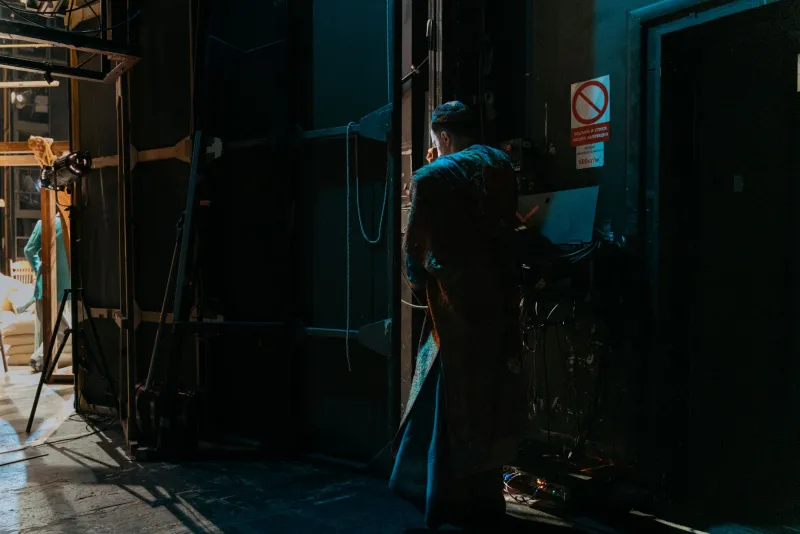
Let's be honest: nobody writes the inspirational Instagram post about being the understudy's understudy. There's no montage for the person who memorizes every line, every blocking note, every costume change—and then watches two other people ahead of them get the call first. It's not exactly the stuff of theater legend.
And yet, the performers who've lived in that particular patch of the wings will tell you something surprising: it might be the most honest place they've ever stood.
The Role Nobody Talks About
In most mid-size regional productions and touring companies across the US, the coverage chain goes deeper than audiences realize. A lead might have a primary understudy and a secondary cover—someone who steps in if the understudy is also unavailable, injured, or sick. That third person? They're often called a "swing" in dance-heavy productions, or simply the second cover. They may rehearse separately, receive fewer notes, and almost never get a put-in rehearsal on the main stage.
Marisa Chen, a Chicago-based musical theater performer who spent two years covering a principal role in a regional touring production, describes the experience with a laugh that carries more than a little earned wisdom. "I knew every single thing about that role. Every breath, every pause, every choice the lead made. And I went on exactly once—for a Wednesday matinee in Columbus, Ohio, because the first understudy had food poisoning and the lead had a family emergency on the same day." She pauses. "It was one of the best performances of my life."
That's the paradox at the center of this particular theater experience: the less likely you are to go on, the more privately committed you sometimes become.
Readiness Without Reward
There's a certain kind of discipline that only gets forged when external validation isn't coming. When you're the primary, people notice your work. When you're the first understudy, you at least get the occasional nod of acknowledgment. But third in line? You're preparing in a vacuum, and that vacuum has a way of revealing exactly who you are as an artist.
Jordan Reyes, a New York-based performer who has understudied multiple Broadway-adjacent productions, puts it plainly: "Being that far back in the coverage chain strips away the ego stuff really fast. You're not doing it for applause. You're not doing it because anyone's watching. You're doing it because you made a commitment to the work, and that's it."
That commitment, stripped of its social rewards, starts to look a lot like something deeper than ambition. It starts to look like integrity.
And the performers who stay in those roles—who don't quietly quit or phone it in during understudy rehearsals—often describe a shift in how they relate to their craft overall. The external markers of success (the callback, the credit, the curtain call) start to matter a little less. The internal experience of being genuinely prepared, genuinely present, genuinely ready—that starts to matter more.
What the Wings Actually Teach You
There's a spatial metaphor here that's hard to ignore. The wings of a stage are the in-between space—not quite on, not quite off. And performers who spend significant time there develop a particular kind of sight. They see the show from an angle nobody in the audience ever gets. They see the mechanics, the quick changes, the whispered cues. They see what the performance actually costs the people doing it.
For many third-in-line performers, that vantage point becomes its own kind of education. "I learned more about acting from watching the lead every night than I ever learned in any class," says Chen. "I was studying her like it was my job. Because it was my job."
That kind of deep, sustained observation builds a specific muscle—the ability to understand a role from the inside out, not just from the outside in. It's the difference between knowing what a character does and knowing why.
The Self-Worth Question
Here's where it gets uncomfortable, and worth sitting with: what does it do to a person's sense of self-worth to be consistently positioned as the option of last resort?
The honest answer is that it depends entirely on where that person is sourcing their worth to begin with.
For performers who've tied their value to visibility—to being seen, recognized, cast—the third-in-line position can feel like a slow erosion. Every week that passes without going on can start to feel like confirmation of a fear they're already carrying: maybe I'm not good enough.
But for performers who've done the internal work—who've built a relationship with their craft that doesn't depend on a spotlight to survive—that same position becomes something else entirely. It becomes proof. Proof that they can show up without being rewarded for it. Proof that their commitment is real, not conditional.
Reyes says it this way: "The day I stopped needing to go on to feel like I belonged in that room was the day I actually started belonging in that room."
Building a Career from the Margins
It would be easy to frame the backup-to-the-backup role as a stopping point—a temporary position on the way to something better. And sometimes it is. But it's worth noting that some of the most versatile, most resilient, most genuinely prepared performers in the business have spent significant stretches of their careers in exactly this kind of role.
Swing performers in long-running Broadway shows are a perfect example. They cover multiple tracks, learn multiple sets of choreography, and may go on with little to no notice in any number of roles on any given night. The mental agility required is extraordinary. And the performers who thrive in those positions don't do it by waiting for the moment to arrive—they do it by making their own inner readiness the entire point.
There's a version of a performing arts career that's built almost entirely on that principle: not on being chosen first, but on being genuinely, completely, almost stubbornly ready.
Showing Up Anyway
At Just Be You Performing Arts, we talk a lot about authentic expression—about bringing your whole, real self to the work. And it's easy to think of that as something that happens under the lights, with an audience watching.
But the performers who've stood third in line will tell you that authenticity doesn't start at your entrance cue. It starts in the room where nobody's looking. It starts in the choice to memorize that monologue even though you probably won't need it. It starts in the Wednesday matinee in Columbus, Ohio, when the stars align in the most chaotic way possible and suddenly it's your moment—and you're ready.
Not because you got lucky. Because you never stopped preparing for a moment that almost didn't come.
That, it turns out, is one of the most authentic things a performer can do.