Stop Hiding the Good Stuff: How Your Weirdest Qualities Are Exactly What Casting Directors Want
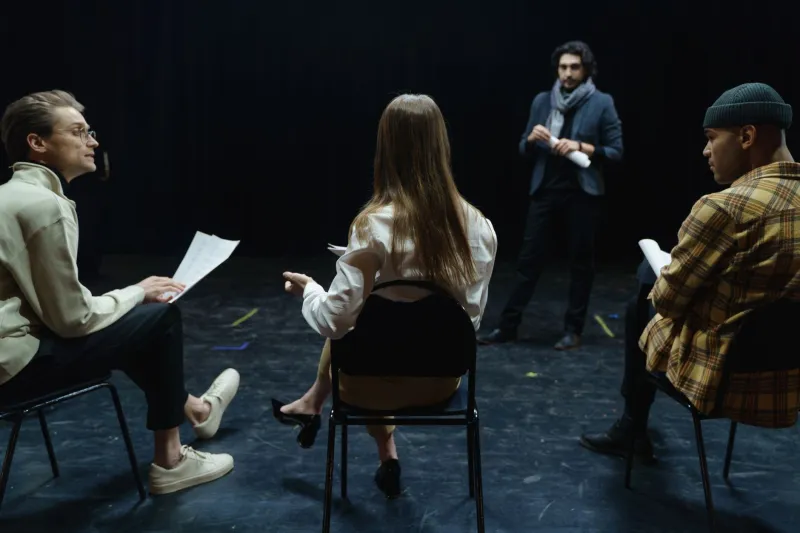
Let's be honest about something that doesn't get said enough in acting classes and audition prep workshops: the advice to "give them what they want" has quietly wrecked a lot of careers before they even got started.
You know the drill. Walk in confident but not too confident. Neutralize your accent. Stand up straight. Don't be too big, too small, too loud, too soft. Basically — don't be too you. And for a long time, a lot of us bought into it. We spent months, sometimes years, carefully filing down the parts of ourselves that felt too specific, too regional, too strange, too much.
Here's the thing though: that strategy? It's not just ineffective. It's actually working against you.
The Casting Room Has Shifted — And It's Not Going Back
If you've spent any time talking to working casting directors over the last several years, a pattern emerges pretty quickly. They're not sitting behind that table hoping someone walks in and disappears into a generic performance. They're hoping someone walks in and surprises them.
"We see hundreds of technically proficient performers," one New York-based casting associate said in a recent industry panel. "What stops the room is specificity. It's the person who owns something about themselves completely."
That shift didn't happen overnight. It's been building alongside broader cultural movements demanding more authentic representation on stage and screen. Audiences are exhausted by polished sameness. They want to see themselves — all the complicated, regional, beautifully imperfect versions of themselves — reflected back. And that demand has trickled all the way up to who gets cast.
Your Accent Is Not a Problem to Solve
One of the most persistent pieces of bad audition advice is the instruction to neutralize your accent. And look — there are absolutely contexts where dialect work is part of the job. But there's a massive difference between having range and treating your natural voice like a liability.
Performers from the South, from the Midwest, from immigrant households, from rural communities — they've spent years being told their voices "read" too specific for general casting. And then someone walks in with that exact voice, owns it completely, and books the role because it brought the character to life in a way no amount of coaching could manufacture.
Accents carry history. They carry place and family and identity. When a performer brings that into a room authentically, it doesn't limit them — it defines them in the best possible way. It gives a casting director something to hold onto.
Body Type, Presence, and the Myth of the "Right Look"
This one cuts deep, and we're not going to dance around it. The performing arts industry has a long and ugly history of telling people their bodies are wrong for the stage. Too tall, too short, too fat, too muscular, too feminine, too androgynous — the list of ways people have been made to feel like their physical presence was a problem is genuinely staggering.
But here's what's actually true: presence is not about fitting a template. Presence is about occupying your body with total conviction. And audiences feel the difference immediately.
Some of the most magnetic performers working today are people who were told early on that they didn't have "the look." What they had instead was an unshakeable relationship with their own physicality — a comfort in their skin that translated directly into performances audiences couldn't look away from. That's not a coincidence. That's the result of deciding to stop apologizing for how you're built and starting to use it.
Quirks Are Just Unexplored Superpowers
Maybe you laugh at weird moments. Maybe you have an unusual way of moving through space. Maybe your emotional responses come out sideways — you get angry when you're scared, or you go very still when everyone else would cry. Maybe you have a quality that drama teachers have spent years trying to "fix."
Stop letting them fix it.
Those quirks — the things that make your performance feel slightly off-script from what's expected — are often exactly what make you irreplaceable in a role. They're the details that turn a competent performance into a memorable one. They're the stuff that makes a director lean forward instead of leaning back.
This isn't about being weird for the sake of it. It's about recognizing that the things that feel most uniquely you are the things that no one else in that audition room can replicate. That's not a disadvantage. That is, quite literally, your competitive edge.
Practical Ways to Start Leaning In
So how do you actually make this shift? It's one thing to say "own your quirks" and another thing entirely to walk into a high-stakes audition room and do it. Here are a few places to start:
Audit your self-editing habits. Pay attention to the moments in rehearsal or in class when you instinctively pull back from something. What are you stopping yourself from doing? Those moments are worth investigating.
Find roles where your specific qualities are an asset. You don't have to wait for the industry to come to you. Seek out material — new plays, student films, fringe theater productions — where what makes you distinctive is genuinely celebrated. Build a body of work that reflects who you actually are.
Work with people who get it. Not every acting teacher or director is equipped to help you develop authentic specificity. Find collaborators who are genuinely excited by what makes you different, not ones who are constantly trying to smooth it over.
Let your prep be personal. When you're preparing for an audition, ask yourself what you genuinely connect to in the material — not what you think the casting team wants to see. The performances that land are almost always the ones rooted in real personal resonance.
The Version of You That Books the Role
Here's the honest truth at the center of all of this: the version of you that walks into an audition room trying to be what you think they want is almost always less compelling than the version of you that simply shows up as yourself.
That doesn't mean you abandon craft. Technique matters. Preparation matters. But technique in service of authentic expression is a completely different thing than technique deployed to hide who you are.
The performing arts have always been at their most powerful when they tell the truth. And the most direct path to telling the truth onstage starts with the performer being willing to tell the truth about themselves — in the audition room, in rehearsal, and every single time the lights come up.
Your flaws, your quirks, your accent, your body, your specific and irreplaceable way of being in the world — that's not the stuff you're working around. That's the material. That's what you're working with.
And when you finally commit to that fully? That's when the room changes.