Always Ready, Never Waiting: What Understudy Life Actually Teaches You About the Stage
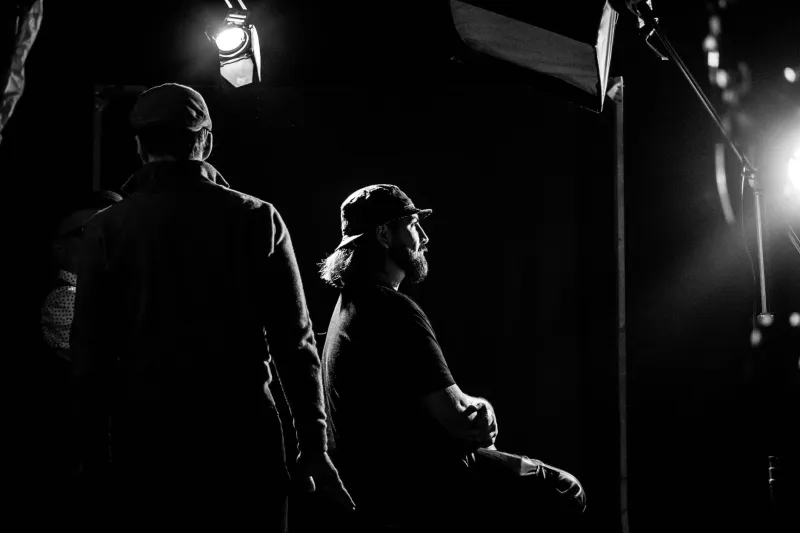
There's a particular kind of ache that comes with seeing your name listed in a program under the words "In the role of [Lead Character], the role will be played by..." — and knowing your name isn't the one that follows. If you've been there, you know exactly what that feels like. Maybe it stings. Maybe it makes you question whether you belong on that stage at all.
But here's what nobody tells you when you first get handed that understudy contract: you are about to learn more about performing — and about yourself — than almost anyone else in that cast.
The Quiet Pressure That Builds Real Performers
There's a specific kind of mental discipline that understudy life demands, and it has no real equivalent in the performing arts world. You have to be completely ready, every single night, for a moment that may never come. You show up to rehearsal, you absorb every directorial note that wasn't given to you, you watch the blocking from the wings, and you hold the entire arc of a character in your body — just in case.
That kind of sustained readiness is genuinely rare. Most performers get to coast a little between their own rehearsals. Understudies don't have that luxury. The pressure is constant, and it's invisible to almost everyone around you.
Marcus, a theater performer based in Chicago who spent two seasons understudying leading roles in regional productions before landing his first principal contract, describes it this way: "You're basically doing double the work for half the recognition. But what I didn't realize until way later is that I was also doing double the character work. I had to understand why every choice was being made, not just what the choice was. That changes how you perform — permanently."
That depth of understanding is the understudy's secret weapon.
Watching Changes How You Think About a Role
When you're playing a lead, your perspective is necessarily narrow. You're inside the character, managing your own cues, your own emotional beats, your own blocking. You experience the show from one angle.
Understudies, by contrast, often watch the production from the house or the wings dozens of times. They see how an audience responds to specific moments. They notice what lands and what doesn't. They observe how the lead performer's choices affect the ensemble around them. It's like getting a master class in storytelling — for free — every single night.
Nadia, a dancer and actor who understudied a principal role in a touring production that hit cities across the Southeast, puts it plainly: "I watched the show forty-something times before I ever went on. By the time I stepped into that role for real, I knew it from the outside in and the inside out. The lead didn't have that. She was always living inside it. I had perspective she couldn't have."
That outside-in perspective often produces something remarkable: a kind of authenticity that comes from deep, considered understanding rather than instinct alone.
Adaptability Isn't a Soft Skill — It's a Survival Skill
When an understudy gets the call — sometimes with hours to spare, sometimes with minutes — there is zero time for panic. You either trust your preparation or you don't. And the performers who've been through it will tell you: that moment of stepping in without a net teaches you something about yourself that years of conventional rehearsal never could.
You learn that you are more capable than you thought. You learn that authenticity under pressure is possible. You learn that the stage doesn't care about your nerves — it only cares about your presence.
Jamila, now a lead performer with a regional theater company in Atlanta, stepped in as an understudy mid-run for a critically reviewed production when she was twenty-three years old. She had less than four hours' notice. "I was terrified," she admits. "But I also felt this strange clarity. Everything I'd been holding in reserve just... came forward. And afterward, my director told me it was one of the most committed performances of the run. I didn't do anything differently than what I'd prepared. I just finally had permission to do it."
That moment — that permission — is something every understudy earns the hard way.
The Ego Work Nobody Talks About
Let's be honest: there's an ego dimension to understudy life that deserves real conversation. Performing arts culture in the US is deeply hierarchical. Lead roles carry status. Understudy roles carry stigma, even when they shouldn't. Navigating that — especially in your early career — takes a kind of emotional maturity that doesn't get enough credit.
Learning to invest fully in something without guaranteed recognition is genuinely difficult. It asks performers to connect with why they do this work in the first place, stripping away the external validation and leaving only the craft itself. That's not a small thing. For a lot of performers, it's the most important growth they ever do.
At Just Be You Performing Arts, we talk a lot about authentic self-expression — about showing up as your full self on stage. The understudy experience, for all its frustrations, has a way of forcing exactly that. When the spotlight finally finds you, there's nothing left to hide behind. Just you, the character, and everything you've quietly built in the dark.
Second Choice Today, First-Rate Artist Tomorrow
The performing arts world is full of stories — some famous, many not — of performers who credit their understudy years as the foundation of everything that came after. The resilience they built. The character depth they developed. The unshakeable confidence that comes from knowing you can step into any moment and hold it.
If you're living that experience right now, in a regional theater or a community production or a touring company somewhere across this country, hear this: your preparation is not wasted. Your watching is not passive. Your readiness is not invisible — even when it feels that way.
The stage has a long memory. And it rewards the ones who show up, every single night, whether or not their name is called.
Keep showing up.