The Stage Didn't Make Me Brave — It Showed Me I Already Was
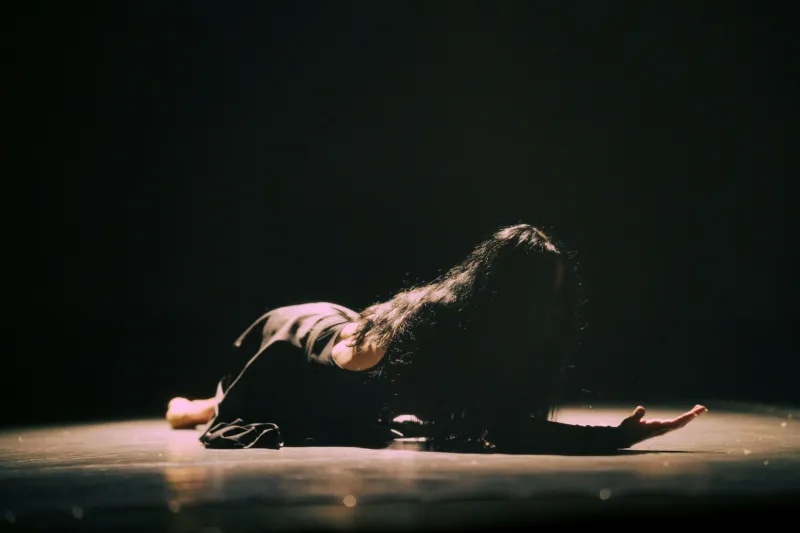
I was sixteen the first time I cried onstage. Not because the scene called for it — though it did — but because something cracked open inside me that I hadn't planned on. I was playing a girl who was furious at her mother, and somewhere in the middle of that monologue, I stopped acting. I was just... there. Raw and unfiltered in front of forty-seven people in a middle school gymnasium in suburban Ohio.
Afterward, my drama teacher pulled me aside. I expected a note about projection or blocking. Instead, she said, "That's the first time I've seen the real you."
I didn't know what to do with that. I'd spent years carefully managing which version of myself I let people see. And yet, hiding inside a fictional character, I'd accidentally told the truth.
That paradox — finding yourself by becoming someone else — is at the heart of what theater does. And it's something I hear again and again from performers across the country.
The Mask That Reveals
There's a concept in psychology called "distancing," and it's exactly as useful as it sounds. When we engage with our emotions through metaphor, narrative, or character, we create just enough psychological space to actually feel things we'd normally shut down. The fictional frame becomes a kind of permission slip.
Dr. Renée Thompson, a therapist who works extensively with adolescents using drama therapy techniques, describes it this way: "The character is a container. When a person says, 'I'm not expressing my own grief, I'm expressing Hamlet's grief,' they can go deeper than they ever could in a direct conversation about their own pain. And then — almost without realizing it — they've processed something real."
This isn't accidental. Theater has always been a place where humans go to feel what they're afraid to feel in everyday life. The ancient Greeks built amphitheaters specifically to hold communal emotional experience. The catharsis wasn't just entertainment — it was medicine.
For modern performers, that medicine looks a little different. It might be a twenty-three-year-old discovering her assertiveness while playing a villain. It might be a shy college student finding his physicality through contemporary dance. It might be someone nonbinary finally seeing a version of themselves reflected onstage and thinking: I could do that. I could be that visible.
Real Voices, Real Journeys
Jordan Vasquez, a performer and teaching artist based in Chicago, grew up in a household where emotional expression was, as they put it, "not exactly encouraged." Theater found them in high school through a required elective, and it stuck.
"I spent the first semester just watching," Jordan says. "I was terrified to look foolish. But then we did an improv exercise where you had to physically embody an emotion — no words, just movement — and something in me just let go. I was angry. I was joyful. I was big. And nobody laughed at me. They cheered."
That moment of being witnessed without judgment is something performers describe over and over. The rehearsal room, at its best, becomes a rare environment where the rules of social performance are temporarily suspended. You don't have to be cool. You don't have to be composed. You just have to be present.
Marcellus Brown, who runs a community theater program in Atlanta for adults over fifty, sees transformation happen in real time. "I have people who come in saying they just want a hobby. By week three, they're crying in rehearsal and saying things like, 'I haven't felt this alive in twenty years.' Theater gives people back something they didn't know they'd lost."
The Self-Doubt Spiral (And How the Stage Breaks It)
Here's the uncomfortable truth about self-doubt: it thrives in isolation. The more we stay inside our own heads, the more convincing the inner critic becomes. Theater — specifically the communal, collaborative, embodied nature of it — interrupts that spiral in ways that are genuinely hard to replicate.
When you're in rehearsal, you have to show up. You have lines to learn, blocking to remember, a scene partner depending on you. The self-consciousness that might paralyze you in a therapy office or a journaling session gets crowded out by the sheer demands of being present in a room with other people who are also taking risks.
And then something interesting happens: you start to see your own courage reflected back at you.
"There's a moment in every performer's journey," says Jordan, "where you realize the audience isn't waiting for you to fail. They're rooting for you. They want you to be good. And when you feel that in your body — that goodwill coming from a room full of strangers — it changes the way you relate to people outside the theater, too."
What This Means for You
Maybe you've never set foot on a stage. Maybe the idea of it makes your palms sweat. That's okay — that's actually perfect, because the discomfort is where the growth lives.
You don't need talent to start. You don't need experience. You need willingness. A willingness to look a little foolish, to feel a little exposed, to show up as exactly who you are in this moment — uncertain and curious and maybe a little more interesting than you've been giving yourself credit for.
Community theater, open workshops, improv classes, dance intensives — these spaces exist everywhere in this country, and most of them are full of people who were once exactly where you are right now. Skeptical. Hopeful. A little scared.
At Just Be You Performing Arts, we've watched people arrive as one version of themselves and leave as something truer. Not a new person — a more honest one.
The stage doesn't create your bravery. It just finally gives it somewhere to go.
Finding Your Own Permission Slip
If there's one thing I want you to take from this, it's that the transformation isn't reserved for naturally dramatic people or classically trained performers. It belongs to anyone willing to stand in a room and try.
Theater is, at its core, an act of saying: I am here. I am real. I have something worth expressing. And in a world that constantly tells us to shrink, to qualify, to perform a more acceptable version of ourselves — that act is quietly revolutionary.
You don't have to be ready. You just have to begin.