The Power of the Supporting Role: How Playing Small Builds a Bigger Artist
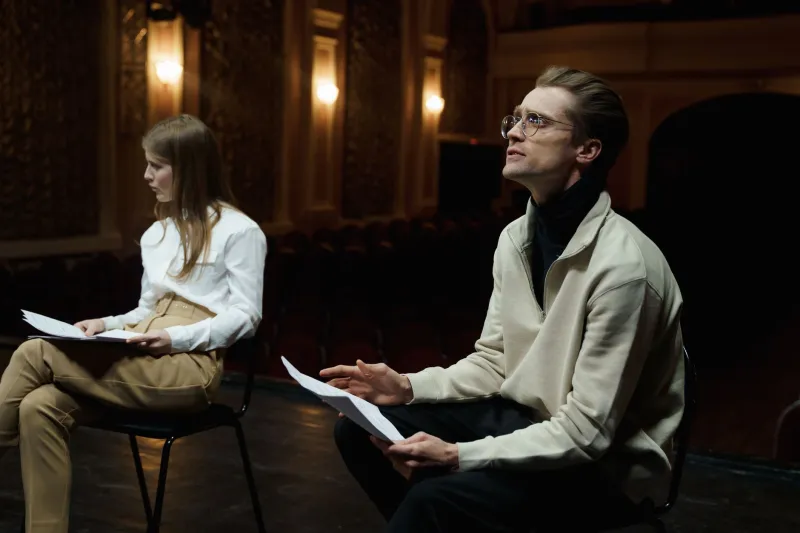
Let's be honest: nobody walks into their first audition dreaming of playing Townsperson #4.
We rehearse our monologues in bathroom mirrors. We pick songs that show off our range. We walk into that audition room with our whole chest out, hoping someone will finally see what we've always known — that we're ready for the big moment. And then the cast list goes up, and your name sits quietly at the bottom, next to a role with maybe six lines and one scene in Act Two.
It stings. Of course it does.
But here's the thing that nobody tells you in those early years of performing: some of the most transformative growth in this art form doesn't happen under the main spotlight. It happens just outside of it.
The Ego Has to Go Somewhere
There's a reason so many seasoned performers talk about smaller roles with a kind of reverence that surprises younger artists. It's not nostalgia. It's not humility performance. It's the recognition that those experiences genuinely changed them.
When you're not the lead, your ego doesn't have anywhere comfortable to hide. You can't coast on the applause you're anticipating. You can't mentally rehearse your curtain call bow during notes. You're just... there. Present. Watching. Absorbing everything around you.
And that enforced presence? It's one of the most underrated tools in an artist's development.
In a supporting role, you're essentially getting a masterclass every single rehearsal. You watch how the leads carry a scene, how they recover from mistakes, how they adjust their energy when the audience is cold or electric. You start noticing what actually works versus what just looks impressive in the mirror at home. You develop an eye — and eventually, an instinct — that you simply can't buy with raw talent alone.
Observation Is a Skill, Not a Consolation Prize
American theater culture has a complicated relationship with ambition. We celebrate the hustle, the grind, the big break. We binge-watch reality competition shows where the loudest, boldest performer wins. And while there's nothing wrong with wanting to lead — that drive is real and valid — it can sometimes blind us to the education happening right in front of us.
Think about the best ensemble performers you've ever seen live. The ones who aren't necessarily carrying the narrative but whose presence makes every scene feel richer, more alive, more believable. Those performers didn't stumble into that skill. They cultivated it, often through years of watching, adjusting, and finding meaning in moments that the script barely acknowledged.
Observation, when you treat it seriously, becomes a form of active artistry. You start asking questions like: Why did that scene land differently tonight? What is the lead doing with their hands during that monologue that makes it so specific? How does the ensemble's energy shift the emotional temperature of the whole room?
Those questions are the foundation of a mature performer. And they're questions you're far more likely to ask when you're not busy counting your own lines.
Small Roles, Big Accountability
Here's something that might surprise you: supporting roles often carry more responsibility than they appear to on the page.
When you're in the ensemble or holding down a smaller part, you're frequently the connective tissue of a production. You're the one making entrances and exits that set up the lead's emotional arc. You're the one whose reaction in the background tells the audience how to feel about what's happening downstage. You're the one who, if you check out for even a moment, can quietly unravel the whole scene.
That's not a small job. That's a massive one.
And learning to do that job with full commitment — to bring your complete, authentic self to a role that the program notes might list as "Ensemble" — builds a kind of artistic integrity that's genuinely rare. It teaches you that performance isn't about when the camera (or spotlight) is on you. It's about being fully present all the time, regardless of whether anyone's watching.
That lesson, by the way, transfers way beyond the stage.
What the Wings Teach You About Yourself
There's a quieter, more personal dimension to this whole conversation that doesn't get talked about enough: what supporting roles reveal about who you actually are.
When the pressure of being "the one" is lifted, you often discover things about your artistic identity that the spotlight obscures. Maybe you find out you're actually more drawn to physical storytelling than dialogue. Maybe you realize you have a natural comedic instinct that never had room to breathe when you were playing the dramatic lead. Maybe you discover a genuine love for the collaborative energy of ensemble work that solo spotlight moments just don't replicate.
Some performers find out, through a series of smaller roles, that they're not actually after fame — they're after connection. That the thing they love most about theater is the collective act of building something with other humans in real time. That realization is life-changing, and it's one that the pursuit of leading roles can sometimes delay for years.
Just Be You isn't just a name — it's an invitation. And you can't fully answer that invitation if you're always performing for the version of yourself you think you're supposed to be.
Reframing the Climb
The performing arts world loves a good origin story. We celebrate the person who was a chorus member for five years before landing their breakthrough role. We share those stories as proof that persistence pays off — and it does. But sometimes we tell them in a way that frames those early years as simply "waiting" for the real thing to begin.
What if we flipped that?
What if those years in the ensemble, in the supporting cast, in the roles nobody clapped the loudest for — what if those were actually the years that built the whole foundation? Not a waiting room, but a workshop. Not a detour, but the main road.
Artists who embrace that reframe tend to carry something different onstage. A groundedness. A generosity toward their scene partners. A comfort in their own skin that doesn't depend on external validation to stay intact.
That's not a minor quality. That's the whole thing.
Give the "Small" Role Everything You've Got
So the next time you find your name near the bottom of the cast list, take a breath before you spiral. Look at that role not as a verdict on your talent, but as an invitation to grow in a direction you haven't fully explored yet.
Show up to every rehearsal like your part matters — because it does. Watch the performers around you like you're studying a craft, not measuring yourself against them. Find the specific, authentic humanity in your character even if they only have three lines. Be the kind of ensemble member that directors remember, not because you were loud, but because you were present.
The spotlight will come when it comes. But the artist you're becoming right now, in the quiet work of the supporting role?
That person is worth every bit of your attention.