Standing By, Moving Forward: How Understudy Work Quietly Builds the Career You Actually Want
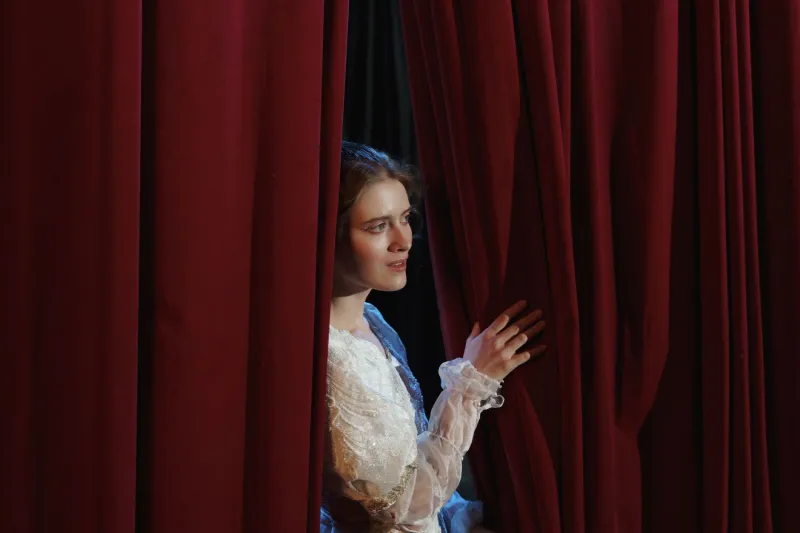
There's a moment every understudy knows. You're sitting in the wings — or maybe in a rehearsal room with a half-eaten granola bar — watching someone else do the thing you've memorized down to the breath. You know every line, every blocking shift, every tiny pause before the act two monologue. And yet, the spotlight isn't yours. Not tonight.
For a long time, the industry has treated understudy work like a consolation prize. A placeholder. Something you do before your real career begins. But talk to casting directors, artistic directors, and the performers themselves, and a very different picture starts to emerge. The understudy track isn't a waiting room. It's a masterclass — and the performers who've put in serious time there often carry something into audition rooms that's genuinely hard to manufacture.
You're Not Just Learning Lines. You're Learning Everything.
When you're the principal in a production, you're deep in your own process. Your focus is rightfully on your own performance, your own arc, your own relationship with the audience. But when you're the understudy, you're watching the whole machine from a uniquely detached vantage point.
You notice how the lead performer adjusts on nights when the audience is slow to warm up. You clock how they recover when a prop isn't where it's supposed to be. You observe the way energy moves through an ensemble and how one person's choices ripple out into everyone else's work. That kind of whole-picture awareness is something most performers don't develop until much later in their careers — if they develop it at all.
Casting directors have started talking about this openly. In conversations across the industry, there's a growing recognition that performers who've understudied significant roles tend to walk into audition rooms with a kind of readiness that's hard to fake. They're not just prepared — they're calibrated. They've spent months watching what works and what doesn't, and they carry that intelligence into every room they enter.
Resilience Isn't Built in the Spotlight
Here's the part nobody puts on the poster: performing arts careers are mostly made of rejection, uncertainty, and the long stretches between. The performers who last aren't necessarily the most talented in any given room — they're the ones who've figured out how to keep going when the narrative isn't going their way.
Understudy work is a direct training ground for exactly that kind of resilience. You prepare fully for something that may or may not happen. You stay sharp for weeks without a guaranteed payoff. You learn to hold your readiness lightly — to stay warm and present without burning out on anticipation. That's not a small skill. That's a life skill. And when the moment finally comes — when you get the call at 6 PM that you're going on in two hours — you find out whether all that quiet preparation was real.
For many performers, going on unexpectedly turns out to be a defining moment in their careers. Not because the performance was perfect, but because it revealed something to them about their own capacity. The pressure was real, the stakes were real, and they handled it. That kind of self-knowledge changes how you move through every audition, every callback, every opening night that comes after.
Adaptability Is the New Versatility
The performing arts landscape in the US has shifted dramatically over the last decade. Regional theater is leaner. Broadway productions are running shorter. The demand for performers who can do more, adjust faster, and step into varied roles without a long runway has never been higher.
Understudies are, almost by definition, the most adaptable performers in any production. They're often covering multiple tracks. They're expected to match an existing production's choices while also being ready to bring something genuine when the moment arrives. They have to be flexible enough to work within someone else's framework without losing their own instincts — which is, honestly, one of the more sophisticated performance skills there is.
Artistic directors at mid-size regional companies have noted that when they're hiring for ensemble-heavy productions or touring work, a performer with understudy experience at a significant level reads as someone who can handle complexity. Someone who won't fall apart when things change. In a world where things are always changing, that matters enormously.
What Casting Directors Are Actually Noticing
Let's be direct about something: casting directors pay attention to credits in ways performers don't always expect. Understudy credits at well-regarded companies — a Broadway house, a major regional, a high-profile new work — signal access. They signal that someone has been in rooms where the bar is high and held their own.
But beyond the resume, casting directors are increasingly attuned to what they describe as a quality of availability in performers who've done significant understudy work. Not availability in a passive sense, but a kind of active openness — a willingness to respond to whatever the scene requires rather than pushing a predetermined result. That quality is directly connected to the hours spent watching, absorbing, and staying ready without controlling the outcome.
One way to think about it: principals often have to unlearn certain habits to get more responsive in their work. Understudies often arrive already there, because their entire role has required them to stay responsive from day one.
Being Second Doesn't Mean Being Less
There's a cultural story we tell about second place that performing arts has internalized in some pretty unhelpful ways. The narrative goes: you're either the lead or you're not quite there yet. But that story doesn't hold up against the actual career trajectories of performers who've done serious standby work.
Some of the most respected working actors in American theater spent significant early chapters of their careers as understudies and swings. Not despite that experience — because of it. The observational depth, the resilience, the adaptability, the hard-won self-trust that comes from going on when no one expected you to: those aren't consolation prizes. They're competitive advantages that compound over time.
At Just Be You Performing Arts, we talk a lot about authentic expression — about finding the version of yourself that's most genuinely present on stage. Understudy work, for all its frustrations, has a way of stripping away the performance of being a performer and getting you down to something more essential. You stop performing readiness and start actually being ready. You stop rehearsing confidence and start actually finding it.
That's not a detour from your career. That's the work.
The Call Is Coming
If you're in understudy territory right now — watching someone else do the role you've memorized, staying warm in the wings, wondering when your moment is coming — here's what the data of real careers suggests: keep going. Not because patience is a virtue, but because what you're building right now is real and it's transferable and it's going to show up in rooms long after this production closes.
You're not standing by. You're moving forward. It just doesn't always look that way from where you're standing.