The Role You Didn't Want Is the One That Made You
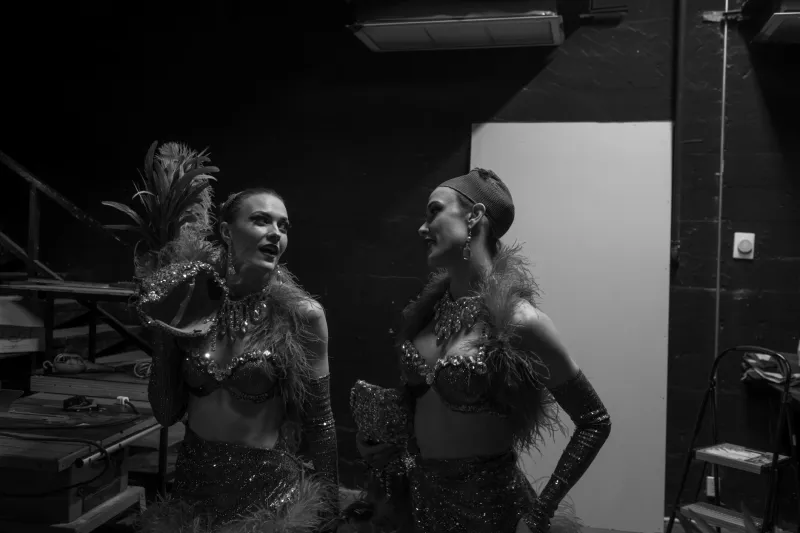
There's a particular kind of quiet that settles over a performer when they read the casting list and don't find their name where they expected it. Not silence, exactly — more like a held breath. You wanted the lead. You prepared for the lead. You were the lead in your head for three weeks before callbacks. And then: ensemble. Supporting character. Understudy. The role with four lines and a hat change.
Most of us have been there. And most of us, at least at first, have felt the sting of it.
But here's what nobody tells you in that moment: the role you didn't want might be the most important one you'll ever play.
The Myth of the 'Consolation Prize'
We've built a whole mythology around the idea that bigger equals better in performing arts. More lines, more stage time, more spotlight — that's the goal, right? The lead is the destination, and everything else is just a pit stop on the way there.
Except that's not how artistry actually works.
Take Marisol, a dancer and actress based in Chicago who spent two seasons in the ensemble of a regional production she'd originally auditioned for as the female lead. "I cried in my car after the casting call," she admits, laughing now. "Like, ugly cried. I thought it meant I wasn't good enough." But eight shows a week in the ensemble taught her something no lead role could have: how to hold space for someone else's story. "You're responsible for the whole world of the play, not just your arc. That changed how I perform everything — even when I am the lead now."
That shift — from 'I didn't get what I wanted' to 'I got what I needed' — doesn't happen automatically. It requires a conscious reframe. But performers who make it through to the other side of that reframe often describe it as a turning point.
What Supporting Roles Actually Teach
There's a reason veteran directors often say they can tell everything about a performer by watching how they behave when they're not the center of the scene. Supporting characters and ensemble positions demand a completely different skill set than leading roles — and it's a skill set that, paradoxically, makes you a better lead later.
When you're not carrying the narrative, you have to learn the art of listening. Real listening. Not the kind where you're waiting for your cue, but the kind where you're genuinely responding to what's happening onstage in real time. That responsiveness is the difference between a technically competent performance and one that actually breathes.
Jordan, a theater actor who's worked regionally across the Southeast, landed a supporting role in a production he'd been gunning for as the protagonist. The character he ended up playing had maybe fifteen minutes of total stage time. "I was bitter for about a week," he says. "Then I got obsessed with those fifteen minutes. Like, who is this person? What do they want? What's their whole life outside of this story?" The specificity he developed for that small role caught the attention of a director in the audience, who cast him as a lead in her next production. "She told me later she hired me because of how present I was in a role most people would've phoned in."
Presence. That's the word that keeps coming up.
The Freedom Hidden in the Background
Here's something counterintuitive: there's a specific kind of creative freedom that comes with not being the lead. When the weight of the whole show isn't resting on your shoulders, you have room to experiment, to make bold choices, to discover things about your instrument that high-stakes leading roles don't always allow.
Dance performer and choreographer Nia, who trained in New York before relocating to Atlanta, describes her time in the corps de ballet of a contemporary company as the most formative period of her career — even though it was also the most humbling. "I was anonymous, basically. And in that anonymity, I figured out who I actually was as a mover. Nobody was watching me specifically, so I could try things. I could fail. I could find my own voice without the pressure of being the voice."
That laboratory quality of supporting work is something that gets lost when we only celebrate the headliners.
Rewriting What 'Success' Looks Like
Part of what makes this so hard is cultural. American entertainment culture — Broadway, Hollywood, the whole ecosystem — is built around the star. We celebrate the names above the title. We track the leads. We forget that every iconic performance exists inside an entire world of performers who showed up, did the work, and made that star look like a star.
Rethinking success in performing arts means expanding what we consider worthy of our full effort and investment. It means asking not 'is this the role I wanted?' but 'what is this role asking me to become?'
That question changes everything.
When you approach a supporting character or ensemble position with genuine curiosity instead of resentment, you stop performing the role and start inhabiting it. And that's when the real work — the authentic, soul-level work that's at the heart of everything we do here at Just Be You — actually begins.
The Long Game
Career-wise, performers who learn to give everything to every role — not just the ones that feel like wins — build something that's hard to quantify but impossible to fake: range. Depth. A reputation for being the kind of artist who elevates whatever they're given.
Marisol, Jordan, and Nia all say the same thing in different ways: the roles that felt like setbacks were actually setup. Setup for a more grounded, more versatile, more themselves version of their artistry.
You might not see it from where you're standing right now, staring at a casting list that didn't go your way. But the stage has a long memory, and it rewards the performers who show up fully — not just when the spotlight is on them, but every single time the curtain rises.
Especially then.
Especially in the roles nobody thought to fight for.