Last on the Call Sheet, First in the Room: What Getting Passed Over Really Builds in a Performer
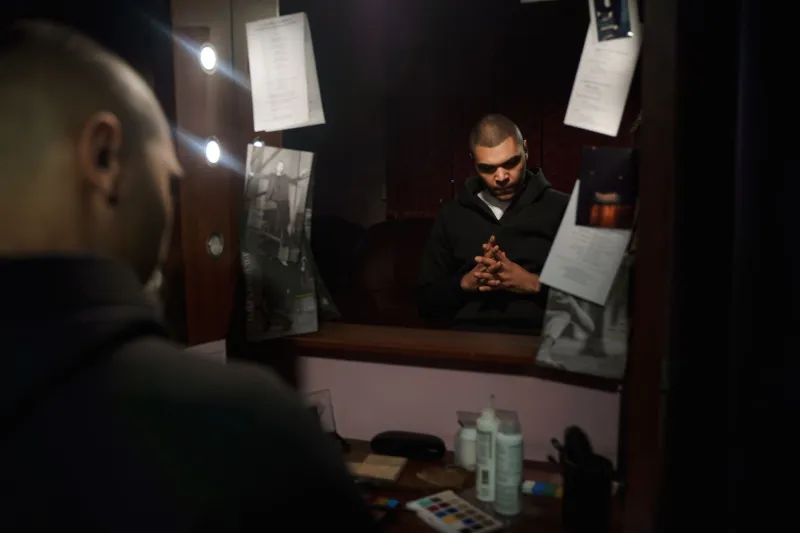
There's a specific kind of quiet that happens after you don't get the part. You close the email. You set your phone face-down on the counter. Maybe you eat something you don't taste. And then, eventually, you decide whether you're going back.
Most people don't talk about what happens in that gap — between the disappointment and the decision to keep going. But that gap? That's where some of the most compelling performers alive are being quietly, invisibly shaped.
The Myth of the Overnight Success
American entertainment culture loves a discovery story. The kid from a small town in Ohio who walks into an open call and books the lead. The teenager who uploads a video and goes viral. We're obsessed with the idea that talent announces itself immediately and loudly, and that the right people always recognize it fast.
The problem is, that story is mostly fiction — or at least, a very selective edit of a much longer film.
For every performer who books their first serious role on the first real try, there are dozens of working artists who spent years in the wings, covering tracks they never got to sing in front of a full house, playing the ensemble when they'd prepared for the lead. And the wild thing? A lot of those artists will tell you, if you ask them honestly, that getting passed over was the thing that made them.
Not despite the rejection. Because of it.
What Waiting Actually Does to Your Craft
When you're not the one in the spotlight, you watch. You watch how the person who got cast handles pressure, handles notes, handles a scene partner who's having a rough night. You absorb technique by proximity in a way that no classroom can fully replicate.
You also get time — time that performers who book quickly often don't have — to figure out who you actually are as an artist. When you're not immediately defined by a role, you get to keep asking the question. You get to experiment in workshops, community productions, and studio classes without the pressure of a contract hanging over your head.
That exploration builds something that's genuinely hard to teach: a distinct point of view. An aesthetic. A reason you make the choices you make, beyond "it's what the director asked for."
Casting directors and directors who've been in this industry for decades will tell you the same thing in different words: they can work with someone who's technically rough but knows who they are. It's much harder to work with someone who's technically polished but has no idea what they actually want to say.
Resilience Isn't a Personality Trait — It's a Practice
Here's what nobody wants to admit: resilience isn't something you have. It's something you build, rep by rep, disappointment by disappointment.
Performers who get cast quickly and consistently sometimes hit a wall when the first real rejection arrives — and it always does eventually. The industry shifts. A director has a different vision. You age out of a type. And if you haven't had to pick yourself up before, that first fall can feel unsurvivable.
But if you've been navigating the sting of "thanks, but no" since your second year of training? You've already built the muscle. You know the shape of the grief. You know it passes. You know you go back to the work.
That's not a small thing. That's actually the thing. The ability to return to authentic expression even when the world has told you that your expression isn't wanted right now — that is the core skill of a working artist.
Showing Up Anyway Changes What You're Showing Up With
There's a shift that happens when you've been in the ensemble long enough, covered enough tracks, sat in enough callbacks that didn't go your way. You stop performing to prove something. You start performing because you genuinely can't help it.
That shift is visible. It reads from the back of the house. Directors feel it in the room during an audition. It's the difference between someone who needs the part and someone who's bringing something to the part — and those are two very different energies.
When you've spent time being seen as secondary, you learn to stop waiting for permission to be fully present. You learn that the only performance you can actually control is the one you give right now, in this room, in front of these people. And that kind of grounded, self-possessed presence is exactly what makes someone memorable — not just in the moment, but the kind of memorable that leads to callbacks, to relationships, to careers.
The Industry Notices the Long Game
There's a reason so many people who've had sustained, meaningful careers in theater, dance, and live performance are quick to reference the years before anything "happened" as formative. Not as a footnote. As the foundation.
Choreographers who've worked on Broadway productions often talk about the dancers who weren't leads for years but who showed up to every rehearsal with the same commitment as the principal cast. Those are the people who get called back for the next project. Not because they waited patiently, but because they never stopped bringing everything they had.
The same is true across every corner of performing arts. The community theater actor in Columbus who's been doing ensemble work for six seasons isn't spinning their wheels — they're becoming someone with genuine range, genuine relationships, and a genuine understanding of what it means to serve a production rather than just occupy it.
What This Means for You Right Now
If you're in a season of not getting cast — or not getting cast in the roles you want — this isn't a verdict on your talent. It's not a sign to quit. It might actually be an invitation to go deeper.
Ask yourself: What am I learning by watching? What am I figuring out about my own artistic voice? What would I do with this role if I had it — and how can I start doing that work right now, whether or not anyone hands me the part?
Authentic expression doesn't wait for the right role. It doesn't wait for the callback or the contract or the standing ovation. It shows up in the studio, in the wings, in the community production with the too-small budget and the too-bright lights.
And the performers who've learned to bring that — every single time, regardless of where their name falls on the call sheet — are the ones who tend to be around for the long haul.
The stage has a way of rewarding the people who love it enough to keep showing up even when it hasn't loved them back yet. Keep showing up. Keep being exactly, fully, stubbornly yourself.
That's the work. And it's already making you.