The Art of Disappearing Into the Work: Why the Best Performers Keep Choosing the Chorus
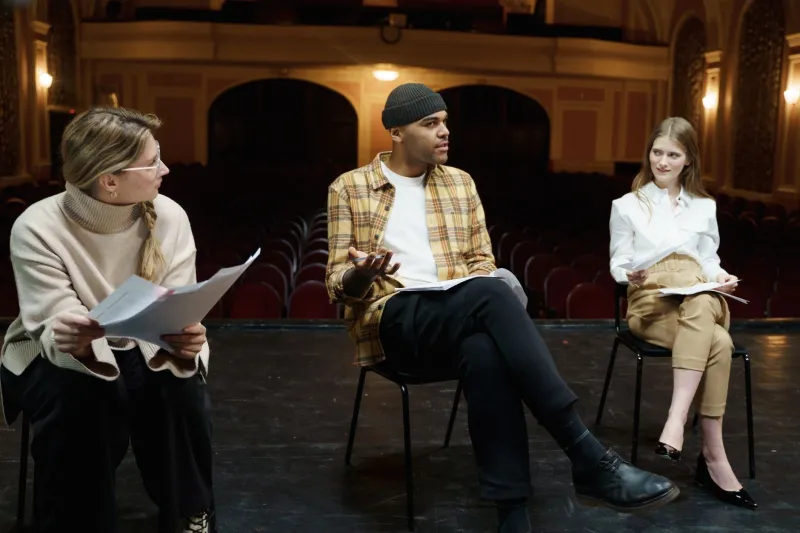
We have a very particular story we tell about ambition in the performing arts. It goes something like this: you start in the ensemble, you work your way up, and eventually — if you're talented enough, lucky enough, persistent enough — you land the lead. The solo bow. The name above the title. That's the destination, right?
Except a growing number of performers are quietly rejecting that narrative. Not because they can't get the lead, but because they've discovered something in ensemble work that leading roles simply can't offer. And what they're finding is genuinely surprising.
The Myth of the Solo Peak
American theater culture is deeply in love with the star. Broadway marquees, Tony acceptance speeches, the whole machinery of theatrical celebrity — it all points toward the individual. We celebrate the Sutton Fosters and the Brian Stokes Mitchells, and we should. Their talent is real and extraordinary.
But somewhere along the way, that celebration hardened into a hierarchy. Leading role good, ensemble role less good. And that hierarchy has quietly warped how a lot of performers think about their own development, making them rush past experiences that would have made them genuinely better artists.
Here's the thing about a leading role: it gives you a lot of stage time, a defined arc, and a character the whole production is built to support. The ensemble? The ensemble gives you something entirely different — the obligation to be fully present without the safety net of narrative centrality. Nobody's watching you specifically. Which means you have to be worth watching anyway.
What Ensemble Work Actually Demands
When you're carrying a show, the show is, in a real sense, carrying you too. The script has your back. The lighting follows you. The other performers feed you cues and react to your choices. There's enormous skill in working within that structure, absolutely.
But in the ensemble, you're building your own internal architecture for every single moment. You're making choices that nobody specifically asked for, choices that might never be directly acknowledged, choices that nonetheless determine whether the stage feels alive or hollow. You're learning to generate energy rather than receive it.
Performers who've spent serious time in ensemble work talk about this in almost physical terms — a kind of muscle that develops when you stop waiting for the spotlight to tell you when to be interesting. You learn to be interesting on your own terms, in your own corner of the stage, because the work demands nothing less.
That muscle, once built, doesn't go away when you step into a lead. It transforms how you inhabit every role you'll ever play.
The Listening That Changes Everything
There's another dimension to ensemble work that doesn't get talked about enough: it turns you into an extraordinary listener.
When you're leading a scene, you're often — understandably — managing a lot. Pacing, projection, the emotional arc you need to hit by the end of the act. It's a lot of output. Ensemble work flips that equation. You spend more time receiving than transmitting, more time responding than initiating. And that practice of deep, sustained listening rewires something in your performance instincts.
Actors who've done significant ensemble work before landing leads often describe their scene partners noticing a difference — that they respond more genuinely, react more specifically, seem more actually present in the room rather than executing a plan. That's not coincidence. That's the ensemble doing what it does.
The same is true in dance. Dancers who've spent years in corps work develop a spatial and rhythmic awareness that's almost preternatural. They know where every body in the room is. They feel the pulse of the group in a way that soloists sometimes have to relearn from scratch.
Unexpected Doors in Unexpected Places
Here's where the career math gets interesting, and a little counterintuitive.
Ensemble performers who bring genuine artistry to supporting work get noticed — not always by audiences, but by directors, choreographers, and casting teams who are watching the whole stage. These are the people who remember you when a role comes along that needs exactly what you've been quietly building. They remember that you were the one who made the background feel real. They remember that you never phoned it in, even in the back row of a number with forty people.
Some of the most interesting casting stories in regional theater involve performers who spent years doing exactly this — being reliably, beautifully present in ensemble work — and then found themselves offered roles that felt almost inexplicable from the outside. From the inside, it made complete sense. They'd been showing directors who they were, in full, for years.
Choosing the ensemble isn't opting out. It's a long game, and it's one that builds a career with a different kind of durability.
The Identity Piece Nobody Talks About
There's something worth naming here that goes beyond craft and career strategy. A lot of performers tie their sense of worth to their role size, and that's a genuinely painful place to live. Every audition becomes a referendum on your value. Every casting decision is evidence for or against your legitimacy as an artist.
Performers who've made peace with — or actively embraced — ensemble work often describe a shift in how they relate to their own identity as artists. When the work itself becomes the point, rather than the recognition the work generates, something loosens. The anxiety doesn't disappear, but it changes shape. It becomes about doing the thing well rather than being seen doing the thing.
That's not a small shift. That's a fundamental reorientation toward why you're doing this at all.
At Just Be You, we talk a lot about authentic expression — and there's something deeply authentic about a performer who chooses collective over individual, who finds their truest voice not by standing apart but by fully joining in. That's a kind of artistic courage that doesn't always get the standing ovation it deserves.
Saying Yes to the Chorus
If you're a performer who's been treating ensemble work as a waiting room — a place to bide time until a better opportunity comes along — it might be worth reconsidering what you're walking past.
The performers who've done the most interesting work with ensemble roles aren't settling. They're investing. They're building range, depth, listening skills, and a relationship with the work that doesn't depend on external validation to feel real.
The spotlight will come and go. The craft you build in the chorus? That's yours to keep.