What Teaching Others Actually Does to Your Own Art
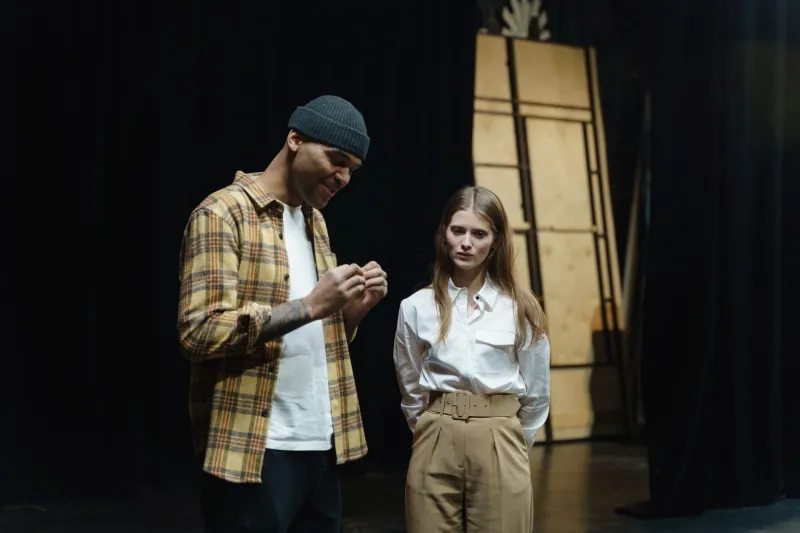
Here's something nobody really warns you about when you start mentoring a younger performer: you're going to learn more than they do. Not because you're bad at what you do — actually, it's kind of the opposite. It's because the act of putting your instincts into words, of watching someone else stumble through the exact same walls you once hit, cracks open parts of your craft you forgot were even there.
Across theater programs, community stages, and regional companies all over the country, experienced performers are quietly discovering one of the most unexpected sources of artistic renewal available to them: showing someone else the ropes.
The Moment You Have to Explain It
Ask any working actor to describe what they do when they're really in a scene — not the technical stuff, but the actual internal experience — and watch them pause. It's hard. So much of what makes a performance land lives in the body, in split-second instinct, in years of accumulated muscle memory. You just do it.
But when a 19-year-old in your ensemble looks at you and says, "How do you make it feel real?" — suddenly you have to find actual words for it.
That search? That's where the growth hides.
When you're forced to articulate something you've always done intuitively, you end up examining it from the outside for the first time. You start to notice the mechanics underneath the feeling. You catch the specific choices you make without realizing you're making them. And sometimes — honestly, pretty often — you realize you've been doing something on autopilot that you could be doing with a lot more intention.
Teaching doesn't dull your edge. It sharpens it.
Mentoring in the Middle of Your Own Uncertainty
Let's be real about something: a lot of performers who end up in mentoring roles aren't exactly sitting on top of the mountain. They're mid-career, navigating callbacks that didn't pan out, piecing together income from gigs and workshops, wondering what their next chapter looks like. They're not done figuring themselves out.
And weirdly? That's exactly what makes them effective teachers.
There's a kind of authenticity that comes from guiding someone through a process you're still inside yourself. You're not handing down wisdom from a place of "I've solved this" — you're saying, "Here's what I know so far, here's what still trips me up, and here's how I keep going anyway." For a younger performer trying to figure out if they belong in this world, that honesty is worth more than any polished masterclass speech.
This is a core piece of what we believe in at Just Be You Performing Arts: authentic expression isn't just about what happens under the lights. It's about showing up honestly in every part of your artistic life — including the parts where you're still working things out.
The Reciprocal Loop Nobody Talks About
There's a term educators use called the protégé effect — the idea that teaching material to someone else dramatically improves your own retention and understanding of it. Researchers have found this across disciplines, from academic subjects to athletic training. The performing arts are no different.
When you walk a newer actor through breath work, through how to take a note without getting defensive, through the specific terror of opening night — you're revisiting all of it yourself. You're reminded of what you once had to consciously learn that's now automatic. And in that reminder, you often find places where the automation has made you a little lazy, a little less curious.
The student asks a question you haven't thought about in years, and suddenly you're thinking about it again. That's not a distraction from your craft. That is your craft.
It Changes How You Hold Your Own Struggles
One of the quieter gifts of mentoring is what it does to your relationship with your own setbacks. When you watch someone you care about face rejection — a callback they didn't get, a role that went to someone else, a performance that fell flat — and you help them process it, something shifts in how you hold your own hard moments.
You hear yourself say things like: This doesn't define you. The work you did to get here matters. Keep going. And if you're paying attention, you realize those words are for you too.
Mentoring creates a kind of mirror. The compassion you extend to a newer performer — the patience, the perspective, the refusal to let one bad night mean everything — has a way of circling back. It becomes harder to be ruthless with yourself when you've been practicing being kind to someone else in the exact same situation.
Making Space Without Losing Your Own
There's a balance worth naming here, because mentoring can tip into self-erasure if you're not careful. Some performers, particularly those who've been told to shrink in various ways throughout their careers, can fall into the trap of pouring everything into a student while quietly abandoning their own goals.
That's not mentorship — that's avoidance in a generous costume.
The healthiest mentoring relationships are ones where both people's growth is treated as real and important. Where the experienced performer isn't sacrificing their own ambition but expanding their sense of what artistic development looks like. Where teaching is something they do alongside their craft, not instead of it.
If you're considering stepping into a mentoring role — formally through a program, or informally by just showing up for someone newer than you — the question isn't whether you're "successful enough" to have something to offer. You don't need to have it all figured out. You just need to be willing to share what you've learned, stay honest about what you haven't, and trust that the exchange will give you something back.
The Stage Gets Bigger When You Share It
There's a particular kind of joy that comes from watching someone you've worked with land a moment onstage — really land it — and knowing you played some small part in helping them find it. It doesn't diminish your own work. If anything, it expands your sense of what the work is for.
The performing arts have always been about connection. Between performer and audience, between scene partners, between a story and the people it reaches. Mentorship is just another form of that connection — one that stretches across time, linking the performer you are now to the one you used to be, and to the ones who are just beginning.
Passing something on doesn't mean letting go of it. It means it gets to live in more places at once.
And honestly? That's a pretty good reason to keep showing up — for yourself, and for whoever's watching you figure it out.