Waiting in the Wings Doesn't Mean Standing Still
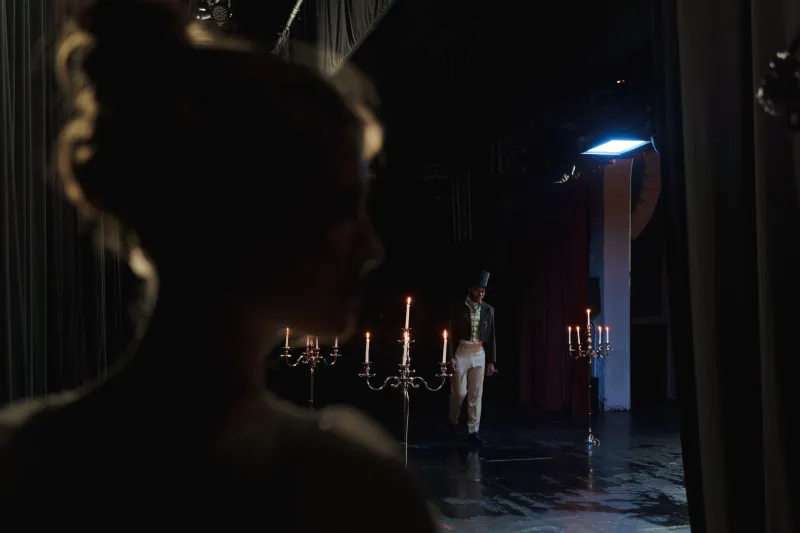
There's a particular kind of quiet that settles in after an audition you nailed — the kind where you walked out knowing you gave it everything, and then... nothing. Or maybe you're in the ensemble, watching someone else take the spotlight you've been rehearsing for in your bedroom mirror for two years. Or you're the understudy who knows every single word, every blocking note, every emotional beat — and the lead hasn't missed a show in six weeks.
This is the in-between. And honestly? It's one of the most psychologically complex places a performer can live.
It's not failure. It's not success. It's that strange, suspended state where your readiness and your opportunity haven't found each other yet. And if you're not careful, that gap can start to feel like a verdict.
It isn't. Let's talk about why — and what you can actually do with this time.
The Myth of the "Deserving" Breakthrough
American performance culture is obsessed with the discovery story. The overnight success. The understudy who steps in and becomes a star. We love that narrative because it feels like proof that talent wins. But here's the thing nobody talks about: for every person whose moment came on cue, there are dozens of equally talented, equally prepared performers whose breakthrough took years longer than it should have.
That's not a reflection of their worth. That's the industry being the industry.
When you tie your sense of value to external timing — to who books what, who gets cast, who gets seen — you're handing your mental health over to a system that was never designed to be fair. Casting decisions involve budget, physical type, relationships, luck, and about a hundred other variables that have nothing to do with how good you are.
Knowing that intellectually and feeling it emotionally are two very different things. But the work of separating your identity from your bookings? That might be the most important artistic development you'll ever do.
What Visibility Limbo Actually Does to Your Head
Let's be real for a second. Sitting in the wings — metaphorically or literally — takes a toll. There's a specific kind of emotional exhaustion that comes from being consistently ready and consistently overlooked. It can look like:
- Losing motivation to practice because "what's the point"
- Comparing yourself obsessively to peers who seem to be moving faster
- Performing with less investment because you've convinced yourself it doesn't matter
- Pulling back from the community that used to energize you
These aren't character flaws. They're pretty normal responses to a prolonged state of uncertainty. The problem is that they can become self-fulfilling — you show up smaller, and the world sees you smaller.
The antidote isn't toxic positivity. It's not slapping on a smile and telling yourself your time is coming. It's something more honest and more sustainable than that.
Redefining What "Progress" Looks Like Right Now
One of the most powerful shifts you can make during a slow season is to stop measuring growth by external milestones and start measuring it by internal ones.
What does that mean in practice? It means asking yourself different questions. Not did I book the role? but did I make a more specific choice in that audition than I did last month? Not am I in the spotlight? but did I stay fully present in every scene I was part of, even the ones in the background?
Those internal metrics are actually more meaningful — and more within your control. They're the things that build the kind of performer who, when the moment does arrive, is ready in a way that goes beyond memorized lines.
Keep a practice journal. Not a highlights reel — a real, honest record of what you're working on, what's clicking, what's still frustrating you, and what you're learning. That document becomes proof of your growth even when no one else is handing you a gold star.
The Art of Staying Artistically Alive
Here's something the waiting period can actually give you, if you let it: creative freedom.
When you're not in production mode — not rehearsing someone else's vision six nights a week — you have space to explore your own. Write the monologue you've been putting off. Take the dance class that has nothing to do with your "type." Start the podcast about your experience as a performer. Direct a reading in your living room with five friends.
Authentic self-expression doesn't require a stage or an audience or a casting director's approval. It requires you showing up for your own creative life, even when — especially when — no one is watching.
This is actually where a lot of performers discover what they're really about artistically. The in-between is uncomfortable, but it's also clarifying. You find out what you'd do if there were no external reward attached to it. And that answer tells you something true about who you are as an artist.
Community Is the Antidote to Comparison
One of the sneakiest ways the waiting period messes with you is by making you feel alone in it. You scroll through your peers' Instagram announcements, their opening night photos, their callbacks and callbacks and callbacks — and you start to feel like everyone else is moving while you're standing still.
Get off the highlight reel and get into real conversation.
Find your people — other performers who are in similar seasons, who are willing to talk honestly about the hard parts. Not to commiserate endlessly, but to remind each other that this is normal, that worth isn't measured in bookings, and that showing up for each other matters.
The performing arts community in the US has incredible pockets of mutual support — local theater groups, online forums, nonprofit organizations (hi, that's us) that exist specifically to hold space for artists at every stage. Lean into those. Let yourself be seen by people who actually see you, not an algorithm.
A Note to the Person Who's Almost Ready to Quit
If you're reading this in a dark moment — if the waiting has gone on long enough that you're genuinely questioning whether this is still for you — I want to say something directly: that question is worth sitting with, not running from.
Sometimes the answer is that you need a break, not a quit. Sometimes it's that you need to redirect your energy into a different corner of the performing arts world. And sometimes, sitting with the question honestly brings you back to a clear, solid yes — this is still mine, I'm not done.
All of those are valid outcomes. None of them mean you failed.
What's not valid is making that decision from a place of pure exhaustion and comparison. Give yourself the grace of a little distance before you decide anything permanent.
Your Moment Is Being Built, Not Withheld
The timing hasn't aligned yet. That's a true statement. But here's another true statement: everything you're doing in this in-between — the practice, the honesty, the community-building, the creative exploration, the emotional work of staying present — is building something.
It's building you. The version of you who will walk into that spotlight, or onto that stage, or into that audition room and be completely, undeniably, authentically ready.
Not because the moment finally decided to show up. But because you never stopped showing up for yourself.
That's the whole thing. That's always been the whole thing.