When Your Body Does the Talking: How Nonverbal Performance Unlocks the Most Honest Version of You
Words are useful. They're also, if we're being real, one of the most effective tools humans have ever invented for avoiding the truth.
We hedge. We qualify. We choose the word that softens the thing we actually mean. We talk around feelings instead of through them. Language gives us control over our emotional exposure in a way that feels safe—and that safety, in a performance context, can quietly become a cage.
Now take the words away entirely.
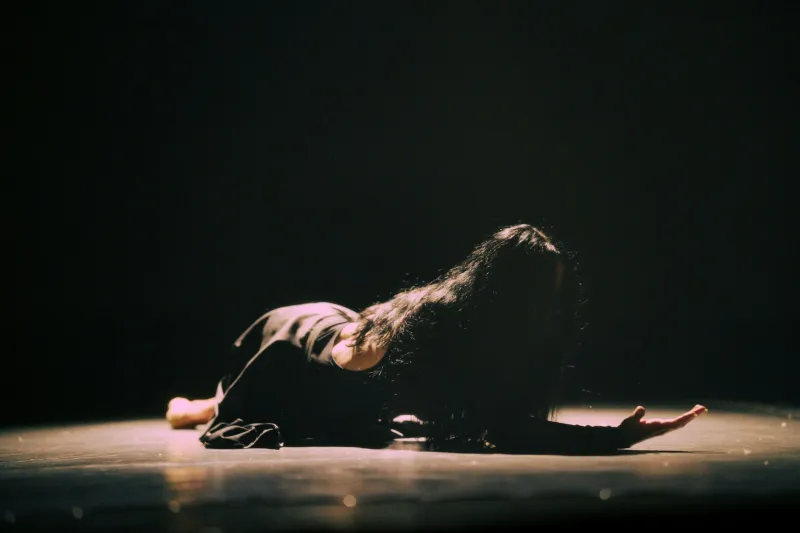
What you're left with is the body—and the body, as any physical theater artist will tell you, is a profoundly honest instrument. It doesn't know how to hedge.
The Discipline of Saying Nothing
Physical theater, pantomime, and movement-based performance have roots that stretch back centuries—from the commedia dell'arte traditions of 16th-century Italy to the silent film era to the contemporary work of companies like Pilobolus, MOMIX, and Chicago's own physical theater scene. But in the US, these forms often get treated as novelties—party tricks, children's entertainment, something you do when you run out of dialogue.
That framing, practitioners will tell you, fundamentally misunderstands what nonverbal performance actually is.
"When you take language out of the equation, you don't lose meaning," says movement theater artist and educator Delia Park, who has trained in both classical mime and contemporary physical theater. "You gain access to meaning that language was blocking. The body goes to places the brain hasn't approved yet."
That last line is worth sitting with. The brain, in a verbal performance context, is always running a kind of editorial process—curating what gets said, how it's framed, what emotional information gets released. In physical theater, that editorial function gets bypassed. The gesture happens before the thought does. The truth arrives faster.
What the Body Knows
There's genuine science behind this. Somatic psychology—the study of the relationship between body and mind—has long documented that emotional experience is stored and expressed physically, often before conscious thought catches up. The tightening in the chest before you recognize you're anxious. The way grief lives in the shoulders. The involuntary brightness that enters the face when something genuinely delights you.
For nonverbal performers, learning to access and amplify those physical responses isn't just a technical skill—it's a form of emotional excavation. And what they excavate often surprises them.
Marco Delgado, a Los Angeles-based physical theater performer who trained at a conservatory program emphasizing movement-based work, describes a rehearsal exercise that changed how he understood himself as an artist. "We were working on a piece about isolation. No text, no music at first—just movement. And I realized about twenty minutes in that I was doing something I'd never done in any scripted scene: I was actually feeling it. Not performing feeling it. Actually feeling it. Because there was nowhere else to put it."
That distinction—between performing an emotion and actually experiencing it—is at the heart of what nonverbal performance offers. Without words to organize and contain the feeling, performers often find that the feeling itself becomes more available.
Silence as Storytelling
One of the most common misconceptions about physical theater is that it's abstract—that without words, narrative becomes vague or inaccessible. But watch a skilled mime work a crowd, or sit with a Pilobolus piece long enough to let it breathe, and what you discover is that nonverbal storytelling can be startlingly specific.
The specificity comes from commitment. In verbal performance, an actor can underplay a moment and let the text carry the weight. In physical theater, everything has to be fully inhabited. The story lives entirely in the quality of the movement—in the difference between a hand that reaches tentatively and one that reaches with desperate certainty. Between a walk that carries the weight of grief and one that carries the lightness of hope.
That level of physical specificity requires performers to make genuine choices about what they're communicating—and those choices, made through the body rather than through language, tend to be deeply personal. "You can't fake it the same way," says Park. "The body has a different relationship to truth than the voice does."
The Real-Life Translation
Here's where it gets interesting for people who don't identify as performers: the skills that nonverbal theater develops translate directly and powerfully into everyday communication.
Research on nonverbal communication consistently shows that the majority of emotional information in human interaction is conveyed through body language, facial expression, and physical presence rather than through words. Most of us navigate this dimension of communication on instinct—or on autopilot, which isn't the same thing.
Performers who train in physical theater develop a conscious, practiced relationship with this dimension. They learn to read physical cues with precision. They learn to inhabit their own physical presence with intention. And they learn—perhaps most usefully—to notice when their body is communicating something their words are trying to contradict.
That last skill? It's basically emotional intelligence with a movement practice attached.
"My students always say that physical theater training made them better listeners," says Park. "Because you're trained to watch the whole person, not just process the words. You start doing that everywhere."
Authenticity Without a Script
At Just Be You Performing Arts, the whole point is authentic expression—bringing the real you to the stage, not a polished, edited, socially acceptable version of you. And while language is a powerful vehicle for that, it's not the only one.
For many performers, nonverbal work is actually where their most authentic self first shows up. Because when you can't hide behind a clever line or a well-timed verbal deflection, what's left is just you—your body, your breath, your emotional truth, moving through space.
That can feel terrifying. It can also feel like the most free you've ever been.
If you haven't explored physical theater or movement-based performance, consider this your invitation. Take a mime workshop. Sign up for a contact improvisation class. Try a devised theater process that starts with movement before it ever touches text.
See what your body has been trying to say all along—now that it finally has the floor.