The Farm Team Isn't Minor League: Community Theater Is Where American Acting Gets Real
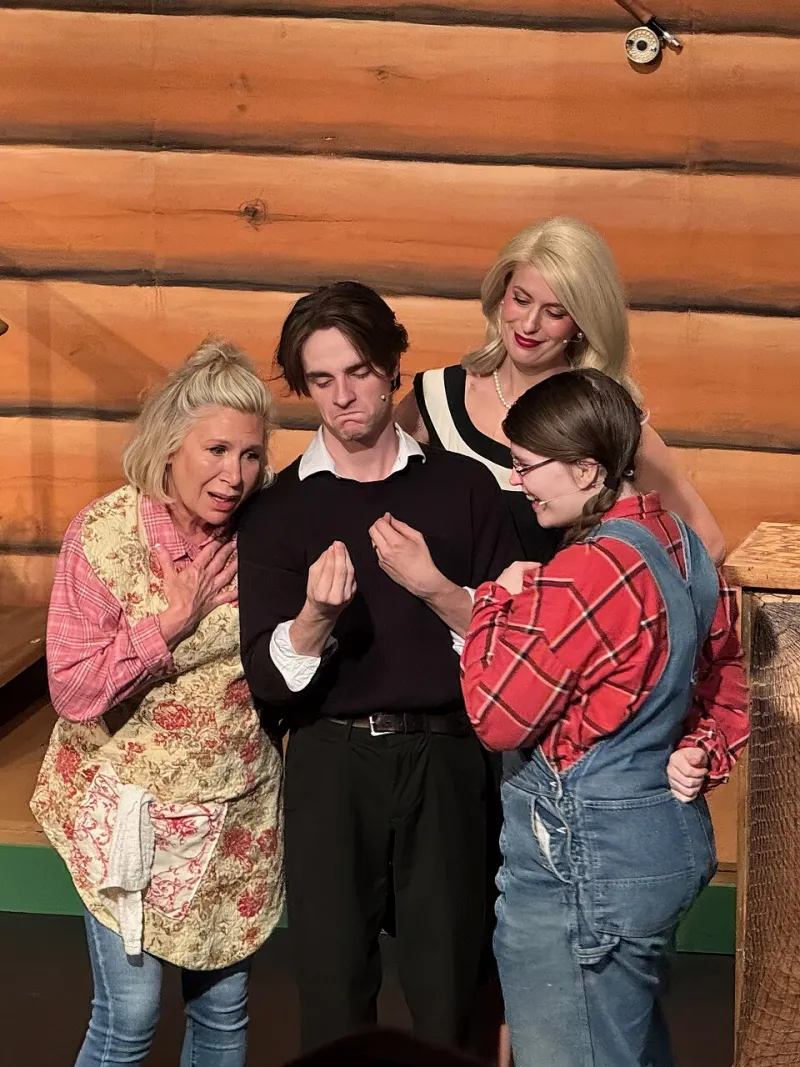
Photo: Harrison Keely, CC BY 4.0, via Wikimedia Commons
There is a phrase that gets tossed around in American theater like a polite apology: community theater. Sometimes it comes with a shrug. Sometimes with a fond smile and a story about a church basement production of Oklahoma! in 1998. Rarely does it come with the respect it deserves.
I want to make a case for the amateur. Not the careless amateur — the one who shows up late, skips rehearsal, treats the stage like a hobby — but the amateur in the original sense: someone who does the work for love. In 2026, with regional theaters tightening budgets and commercial tours pricing out whole zip codes, community stages are not the minor leagues. They are the farm team. They are where American acting gets real.
The Word ‘Amateur’ Has a PR Problem
Somewhere along the way, amateur became a synonym for lesser. That is a mistake. The amateur performer is not missing something. They are choosing something. They are choosing to build a set on a Tuesday after work, to memorize lines between school pickup and dinner, to sell raffle tickets so the lights stay on. That is not a lack of professionalism. That is a different kind of commitment.
Professional theater asks: can you do this eight times a week and make a living? Community theater asks: will you do this after a full day and still find something true in it? Both questions matter. Only one of them is available to most people.
What Community Stages Actually Teach
Community theaters are where actors learn the unglamorous fundamentals. You learn how to hold a scene when a prop breaks. You learn how to project without a body mic in a room with bad acoustics. You learn how to share a dressing room the size of a closet and still make someone laugh before places. You learn that the audience is not an abstract concept — it is your neighbor, your co-worker, the guy who fixes your car.
Those lessons do not disappear when a performer moves into professional work. They become the floor beneath it. I have seen actors with MFAs relax into a community production because they were finally allowed to experiment without a casting director taking notes. I have seen beginners discover in a 120-seat house that they are funny, or fierce, or capable of holding a room. That discovery is not a consolation prize. It is the whole point.
The People Who Start at Forty-Seven
One of the quiet miracles of community theater is how many people start late. A nurse who always wanted to try acting. A retired teacher who signs up for a musical. A parent who auditioned on a dare and comes back for the next show. These performers are not trying to catch up to a career timeline. They are stepping into a part of themselves that never got a dressing room.
Plenty of us were told we were too late — by a guidance counselor, by a lack of money, by a family that did not see the point. Community stages refuse that story. They say: the curtain goes up when you get here. That is not a small thing. In a culture that worships youth and polish, a 47-year-old making a stage debut is a radical act of self-permission.
Clear-Eyed, Not Sloppy
Let me be honest: amateur does not automatically mean good. Some community productions are under-rehearsed, overbooked, and held together with hope and duct tape. The best community theaters know this. They do not use their budget as an excuse. They use it as a boundary. They choose plays they can actually cast and rehearse. They build a culture where people show up on time and learn their lines. They treat the audience like adults.
The standard is not Broadway. The standard is truth. A stripped-down production of Our Town in a library meeting room can hit harder than a glossy tour if the actors are listening to each other. The farm team works because the work is real, not because it is fancy.
The Audience Is Part of the Crop
Community theater also grows audiences. Someone sees a neighbor in a show and comes back for the next one. A kid watches a parent rehearse and decides to audition next year. A local business sponsors a season and starts to feel like a stakeholder in the culture of the town. That is how a theater ecosystem stays alive — not just by training performers, but by making people feel like the stage belongs to them.
So no, amateur is not a dirty word. It is a claim. It says the stage is not only for the anointed. It says craft can grow in a church basement, a grange hall, a converted storefront, a high school auditorium. It says you can start where you are, with what you have, and still make something honest.
That is not minor league. That is the ground floor of the art form. And in 2026, we need it more than ever.